Important: This guide explains visual simulation. It does not diagnose a condition or recommend treatment.
Key takeaways
- A photo can compare broad visible tooth-line, shade and smile-character preferences.
- It cannot determine implant number, implant position, bone condition, bite or suitability.
- Separate the aesthetic reference from the clinical plan, costs and travel decisions.
Aesthetic preview versus clinical plan
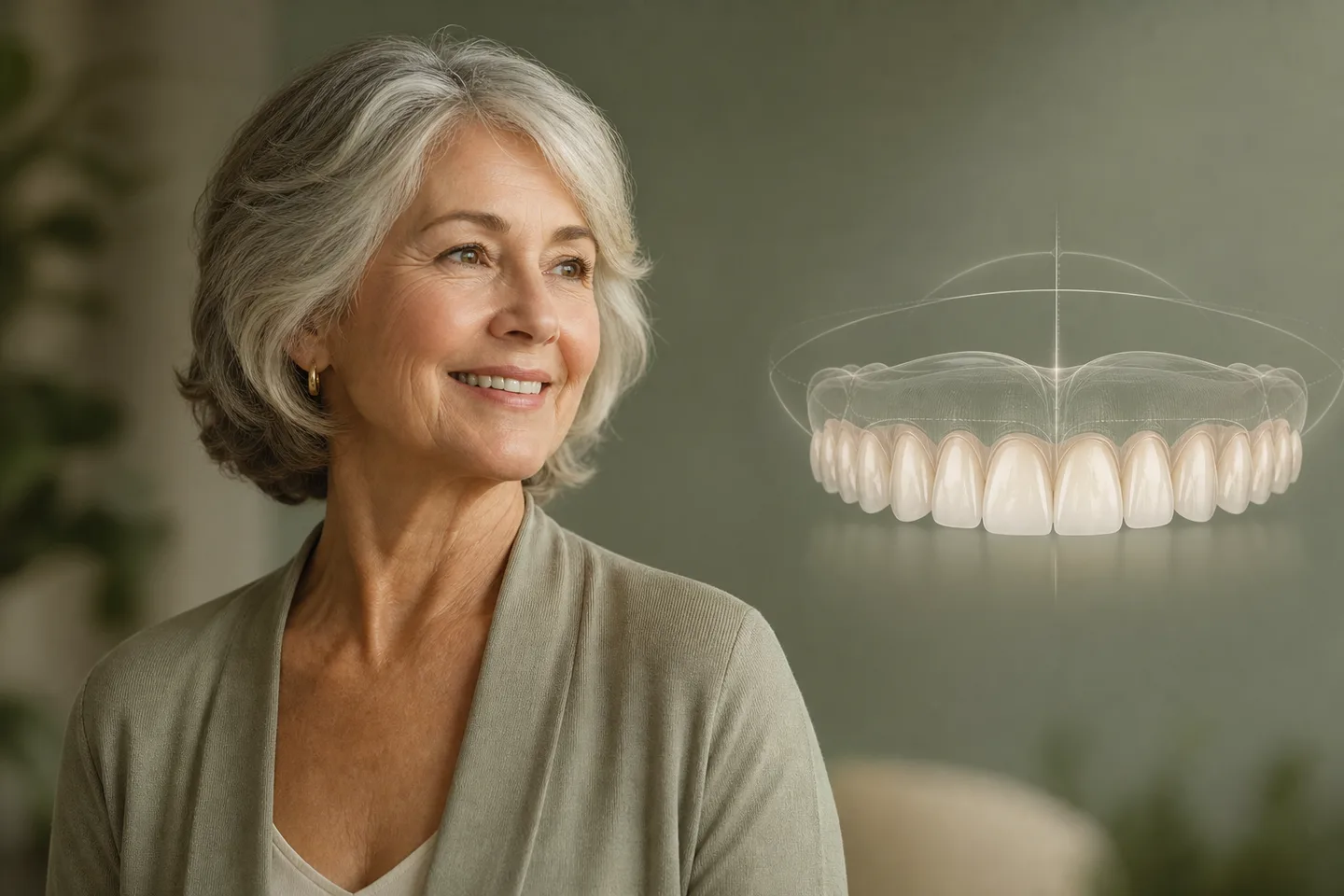
A full-smile preview can help someone imagine a more complete visible tooth line and compare broad aesthetic directions. It does not decide how many implants are needed or where they can be placed.
Clinical questions remain separate
A real full-arch assessment may require examination, health history and three-dimensional imaging.
- Bone availability and anatomy
- Implant number and position
- Bite and restorative space
- Temporary and final restoration stages
- Gum and lip support
- Maintenance and follow-up
The right role for the image
Use the preview to express preferences and prepare questions. Do not use it to compare treatment quotes or assume that a specific visible result is guaranteed.
What to compare in a complete-smile concept
Focus on the relationship between the tooth line, lips and face. Try restrained changes in width, central-tooth length, curve and warmth. A perfectly uniform row may look impressive when enlarged but artificial at conversational distance.
A flat image also cannot reproduce speech, movement or lip support. Those questions require records, clinical design and often a temporary stage that can be evaluated in motion.
Prepare for a responsible case review
If you are considering treatment away from home, ask how records are reviewed before travel, what remains uncertain until examination, who provides aftercare and what happens if the plan changes. A preview should never be the evidence used to book surgery or accept a fixed outcome promise.
Request written separation between confirmed findings, provisional assumptions and optional aesthetic choices. That makes it easier to compare providers responsibly and to understand which parts of the plan, timing or cost may change after examination.
- Which imaging and dental records are needed before a provisional plan?
- What decisions can only be made after an in-person examination?
- How are temporary teeth, healing and the final restoration sequenced?
- Who handles maintenance, complications and follow-up after travel?
- Which costs could change if the clinical findings differ?
Frequently asked questions
Can an All-on-4 simulator show the final result?
It can illustrate a visible aesthetic concept, but it cannot predict the final result or capture speech, bite, tissue, materials and healing.
Can a photo tell whether I qualify for All-on-4?
No. Suitability requires an individual clinical assessment and appropriate imaging.
Is All-on-4 always four implants?
The name describes a treatment concept, but the appropriate number, position and restorative approach are clinical decisions for the individual case.