Important: This guide explains visual simulation. It does not diagnose a condition or recommend treatment.
Key takeaways
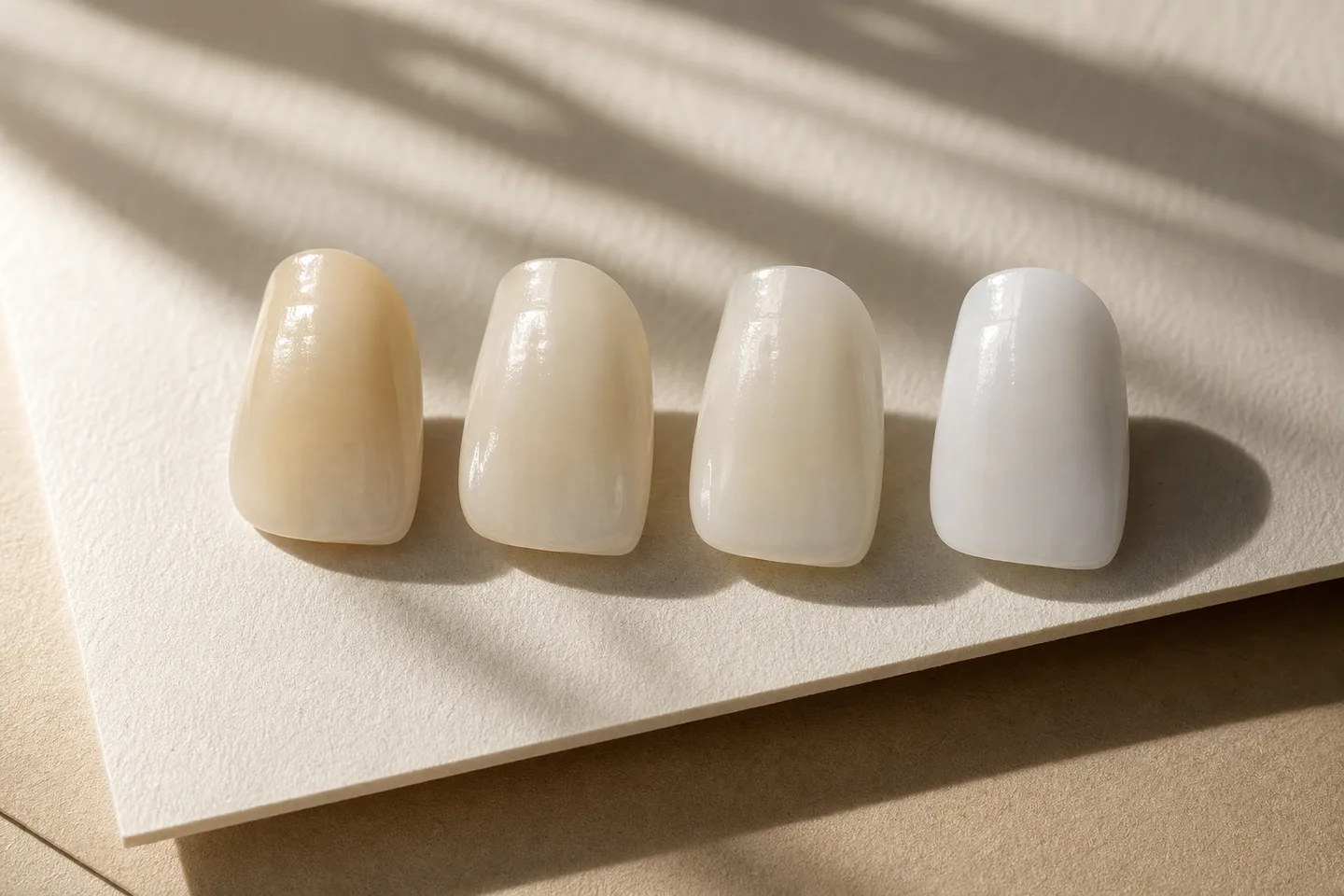
- Natural-looking white contains subtle warmth, texture and translucency.
- Very bright shades can dominate when the image returns to normal face size.
- A phone preview describes a direction; clinical shade selection needs controlled light and real materials.
White is a range, not one colour
Natural teeth reflect warm and cool light differently across the surface. A completely flat white block can look less believable than a slightly warmer shade with texture and gentle translucency.
Compare at normal size
A bright shade that looks appealing in a close-up may dominate the whole face when viewed at normal size. Always zoom back out before choosing a preference.
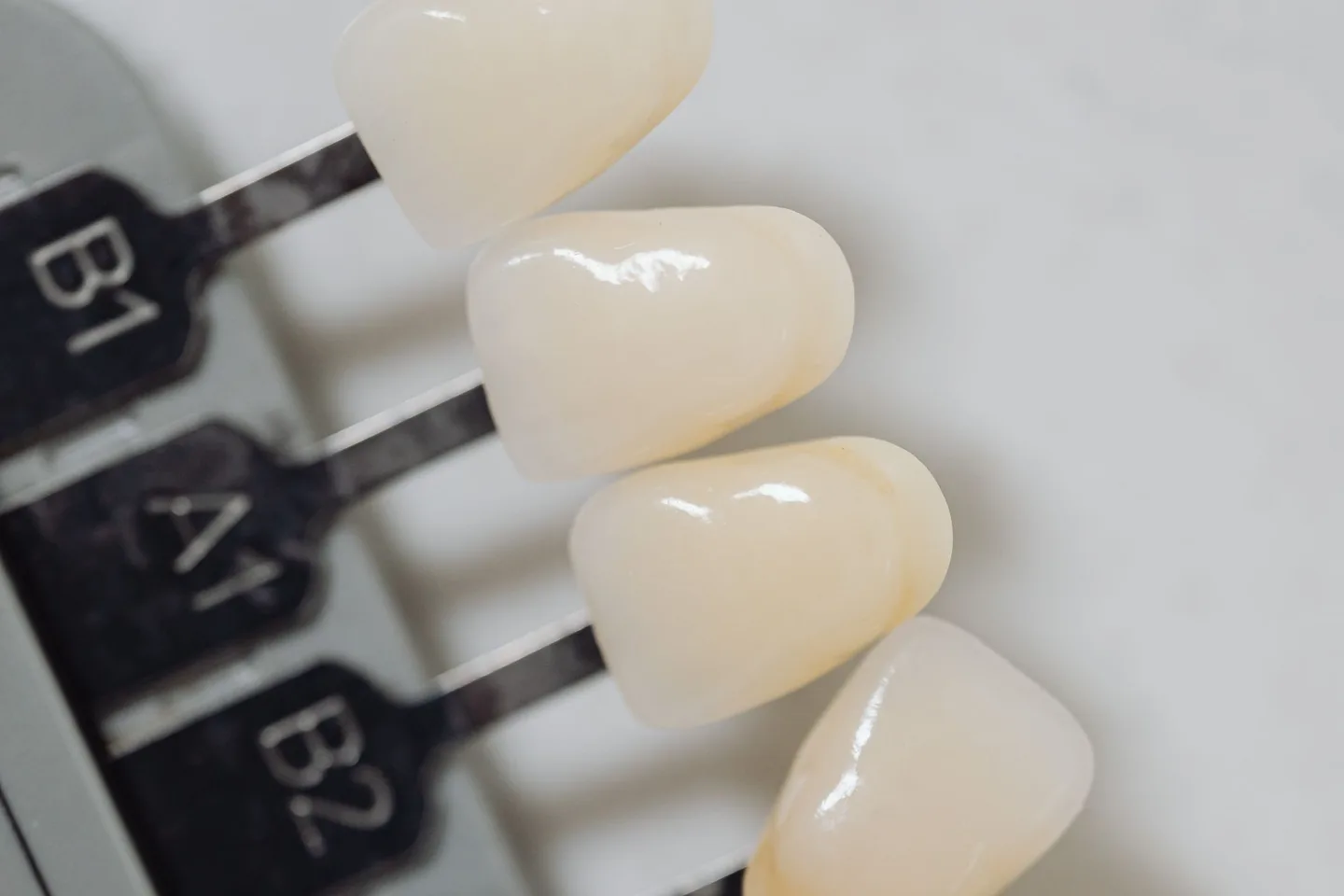
A preview is not a shade prescription
Phone screens, room lighting and camera processing all change colour. Use a preview to describe a direction, then discuss actual shade selection with a dental professional.
Contrast changes the way white is perceived
The same tooth colour can look different beside warm skin, cool lipstick, dark clothing or a bright screen. Camera auto-exposure also compensates for the face and background, so two photographs of the same smile may not match.
Compare versions on the same device, at the same brightness, and avoid making a decision from a screenshot sent through an app that alters colour or contrast.
How to make a useful comparison
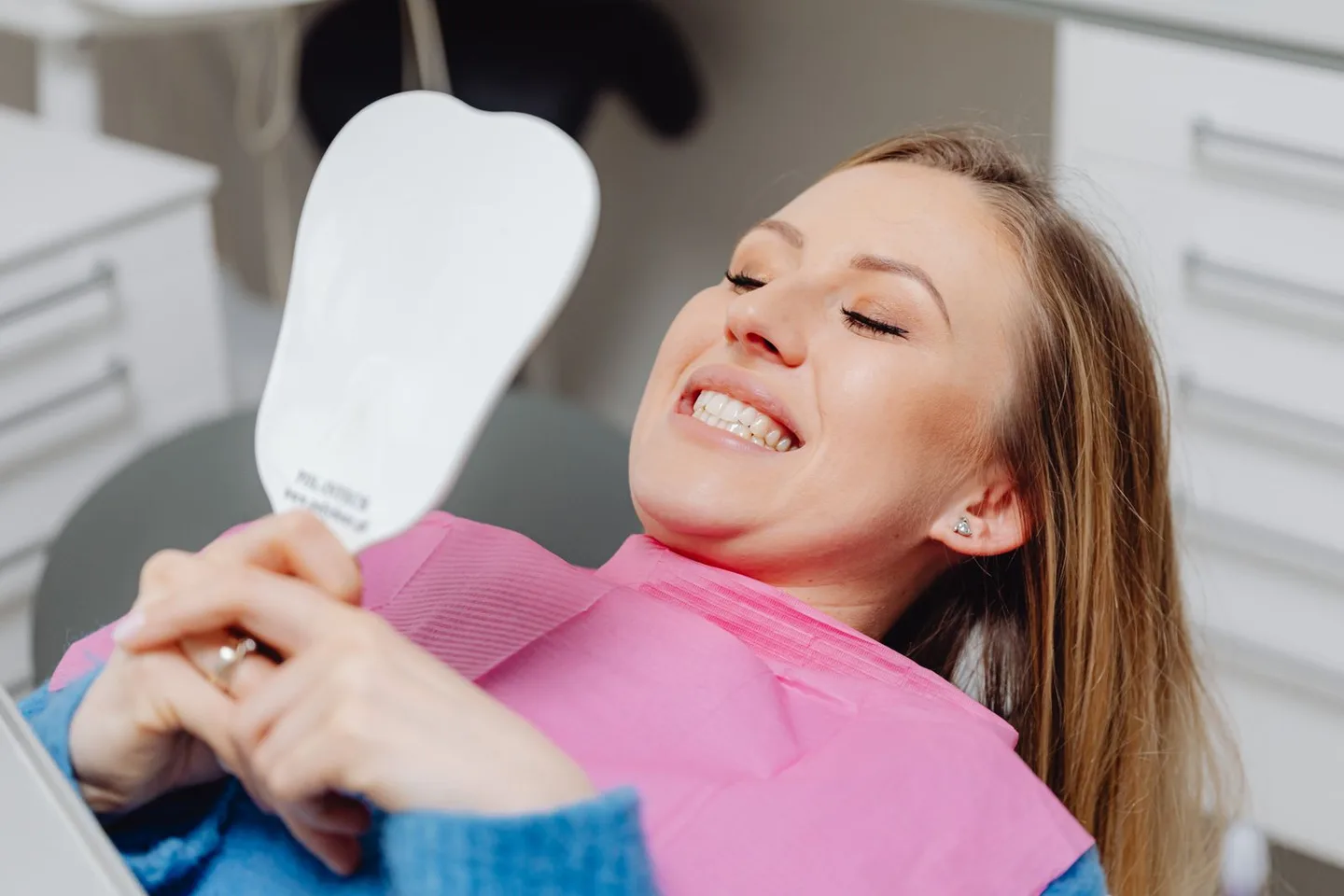
Save three restrained versions: the current-looking baseline, a warm natural white and a clearly brighter option. Let your eyes rest, then compare them at normal face size rather than choosing immediately from a close-up.
- Does the shade draw attention away from the eyes?
- Do the teeth still show small surface and edge variation?
- Will untreated neighbouring teeth remain visible?
- Does the smile feel appropriate in daylight as well as on screen?
Materials and lighting can change the final impression
A rendered shade does not reproduce how enamel, composite or ceramic reflect light. Surface texture, thickness and the colour underneath may all affect the final appearance. Use the simulator to narrow a broad preference, then ask to see relevant material and shade examples under more than one lighting condition before making a clinical choice.
Frequently asked questions
What colour are natural white teeth?
Natural teeth are not a single flat white. They usually show warmth, translucency and variation across the surface and edge.
Why does the preview look different on another phone?
Screens, brightness settings, colour profiles and image compression all change perceived shade.
Can a simulator choose my final dental shade?
No. Use it to express a preference range, then evaluate real shade samples and materials with a dental professional.